Teenage Mutant Ninja Turtles: Empire City is a VR 1–4 player free-roam brawler set in New York. Releasing on Meta, SteamVR, Pico and PlayStation VR (May 2026). Built in Unity. Duration: 3 years
My role was designing level blockouts and 2D layouts for the majority of the interior and exterior environments. I implemented and iterated on gameplay spaces in Unity, focusing on traversal, player flow, and combat encounters. I also researched iconic New York landmarks to strengthen environmental authenticity and improve navigation within the open areas.
Throughout development I collaborated closely with art, and engineering to refine level pacing and layout. As production progressed, my focus expanded into mission and gameplay design, contributing to mission structure, player objectives, and later-stage level polish and gameplay tuning.
Case 1: China Town, Free roam Level Design
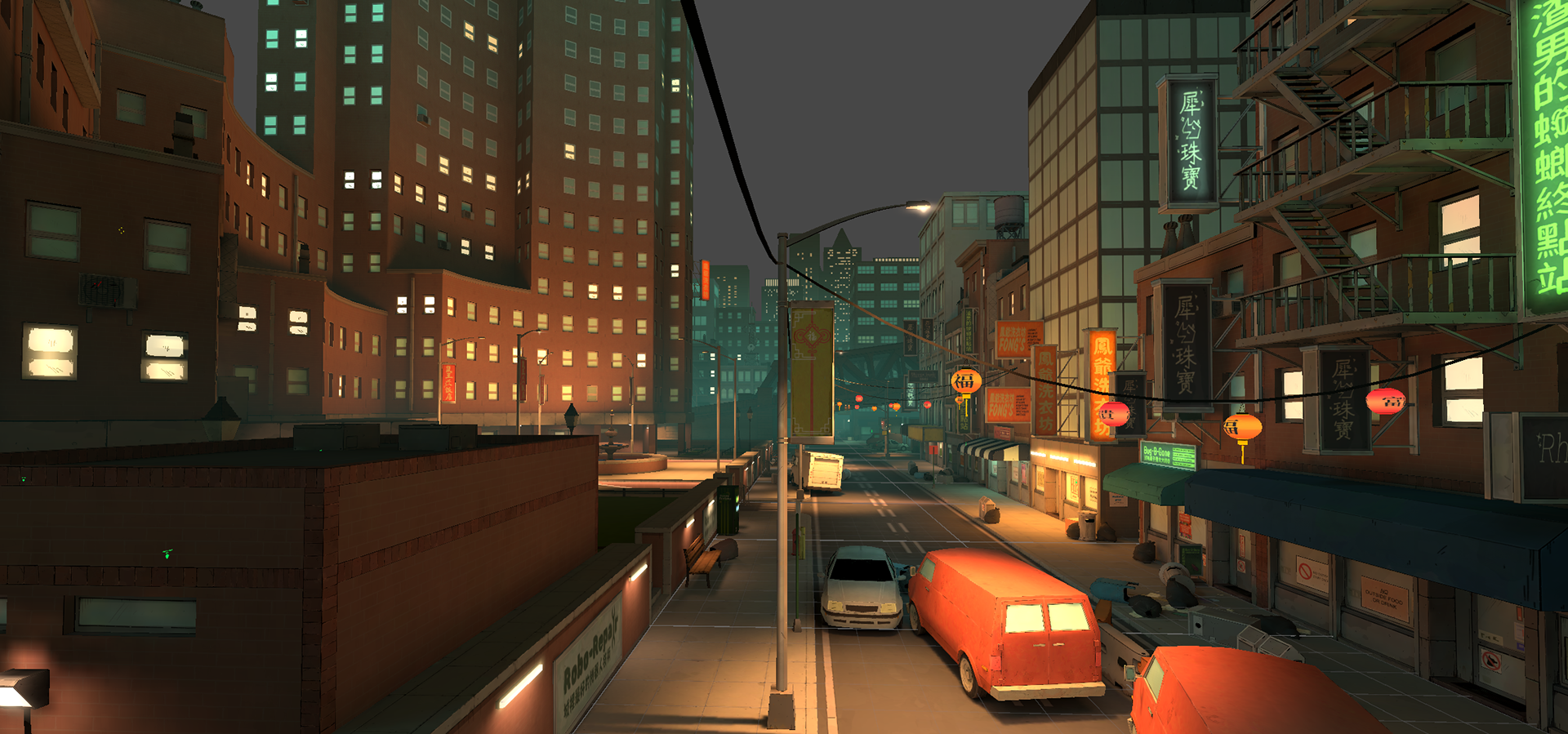
This case explores a free roam level set in Chinatown. My role was to develop the initial blockout and iterate on the design throughout production as gameplay systems evolved.
A key focus was supporting the game’s traversal mechanics -running, jumping, dashing, climbing, and dynoing -ensuring the level encouraged fluid movement and rewarding player navigation. As the first blockout created for the project, this level helped define how free roam environments should be structured to support traversal and player flow.
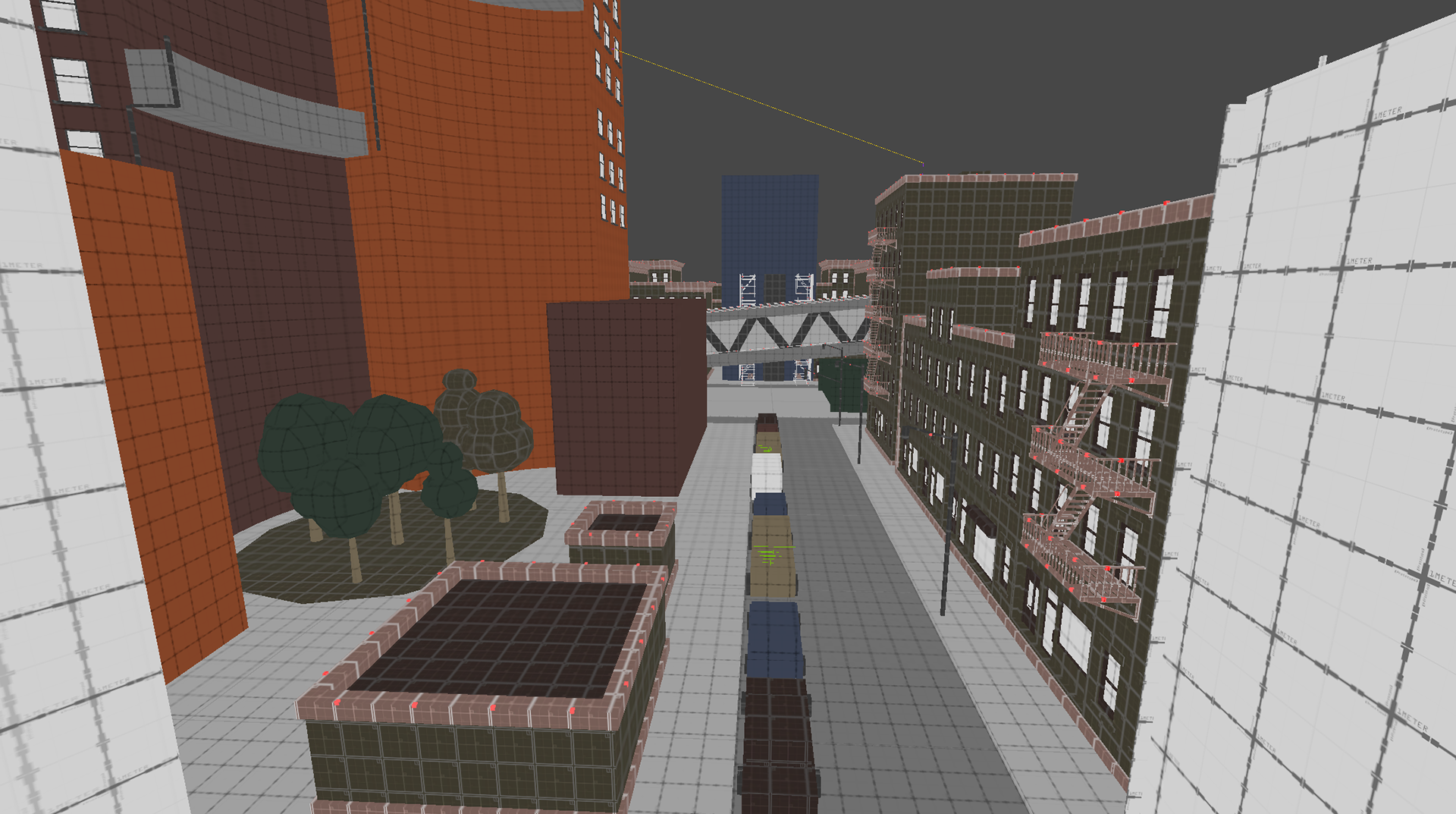
An early blockout where I had started to implement assets from a LDK in certain buildings
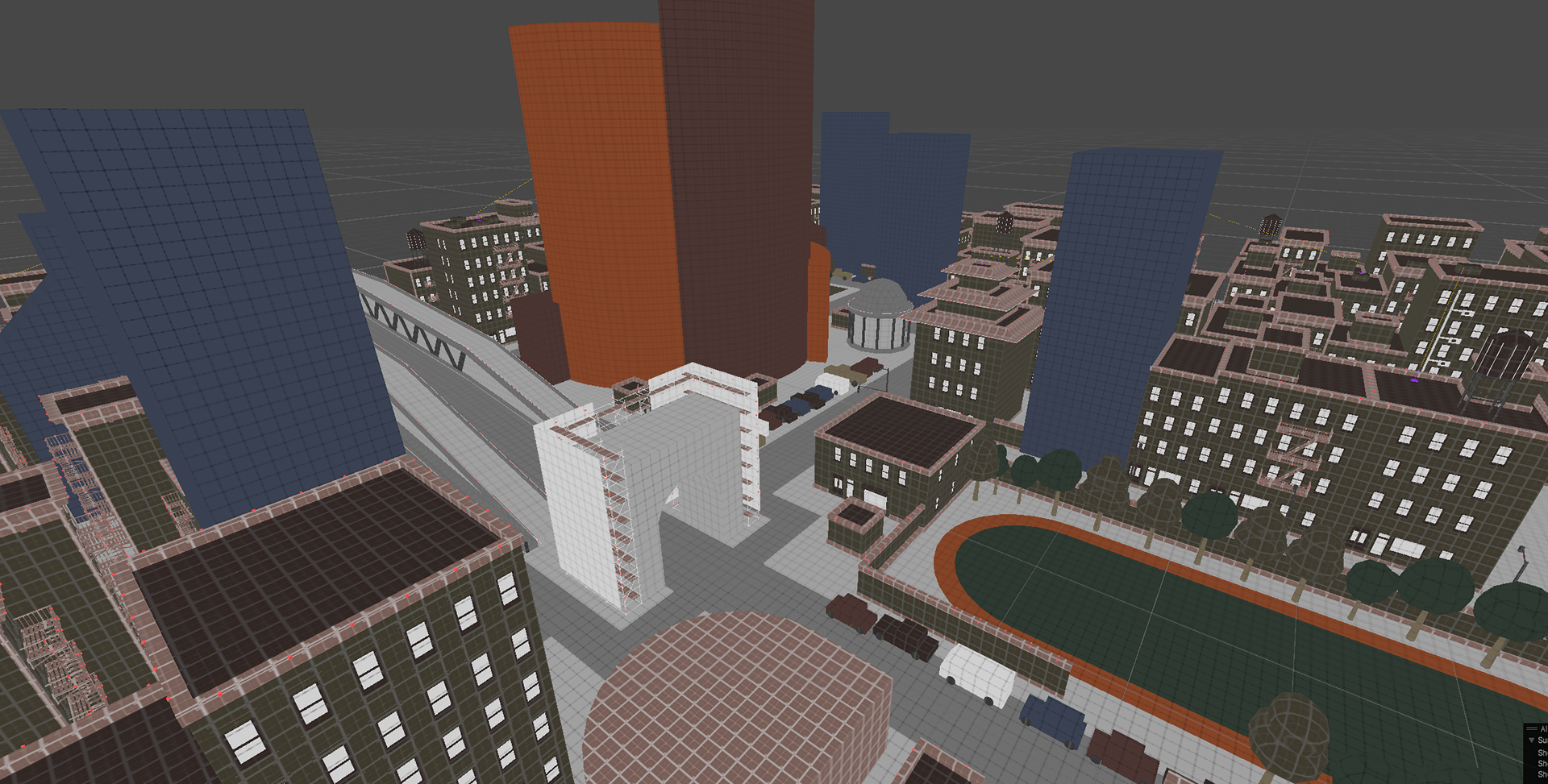
The green buildings are part of the LDK where I hade attached grab points and hook points for climbing traversal
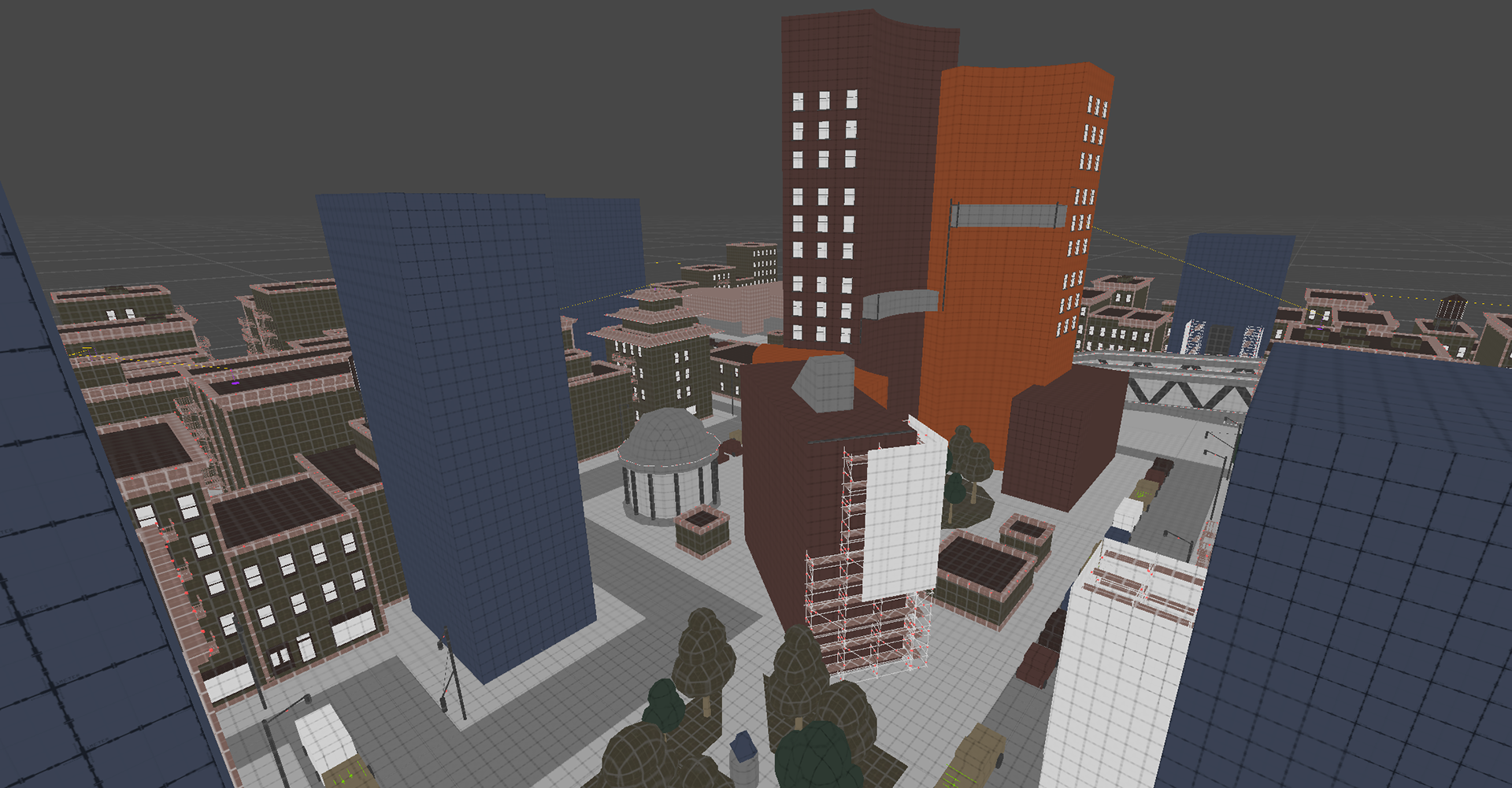
I wanted the ChinaTown map to be centered around a building that I based on the Confucious building In the real China Town. This building has great properties for a center pice.
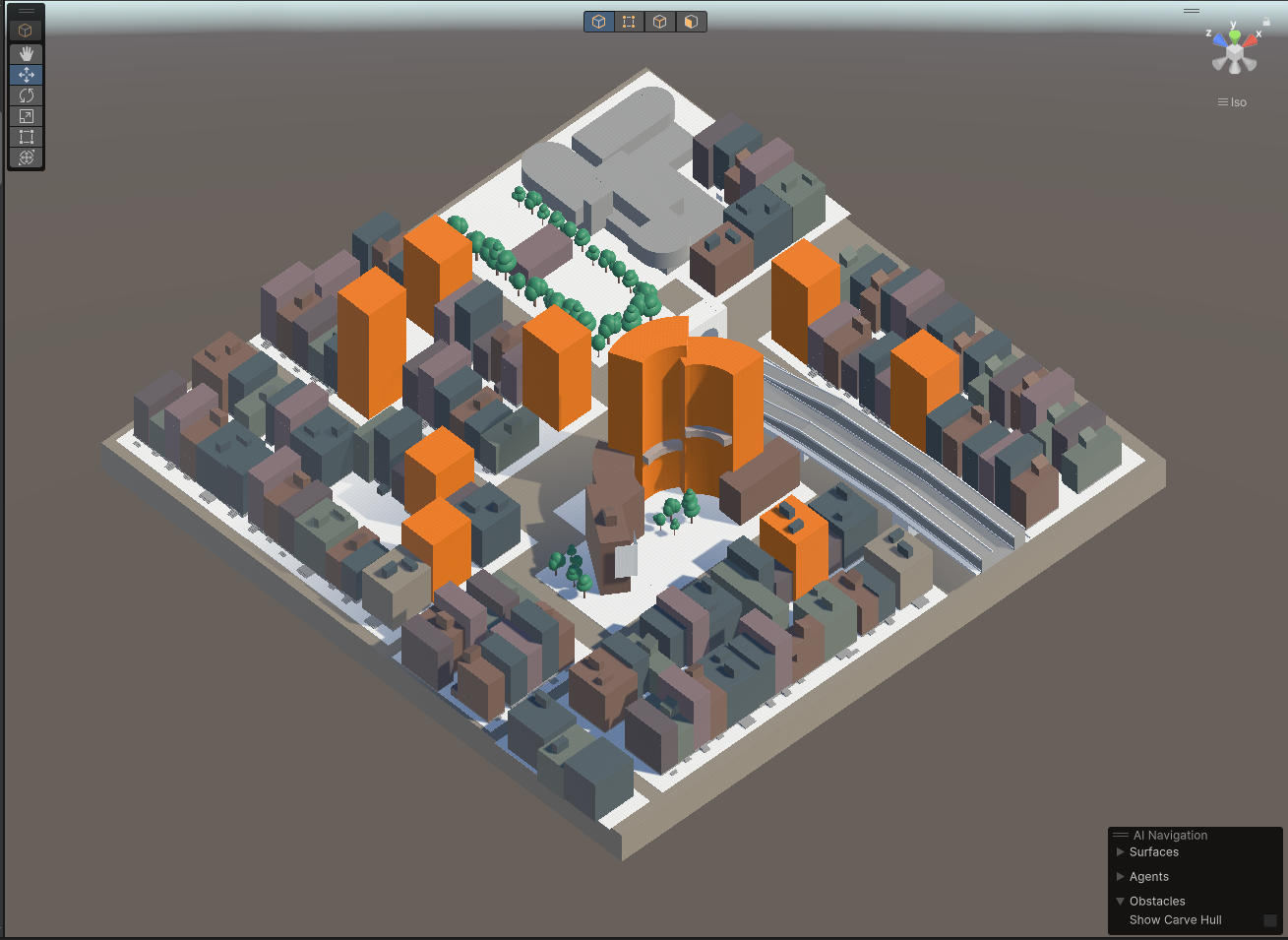
An early layout draft with a mix between higher occludin buildings (orange) and more climbable buildings in a more traditional tenament building style.
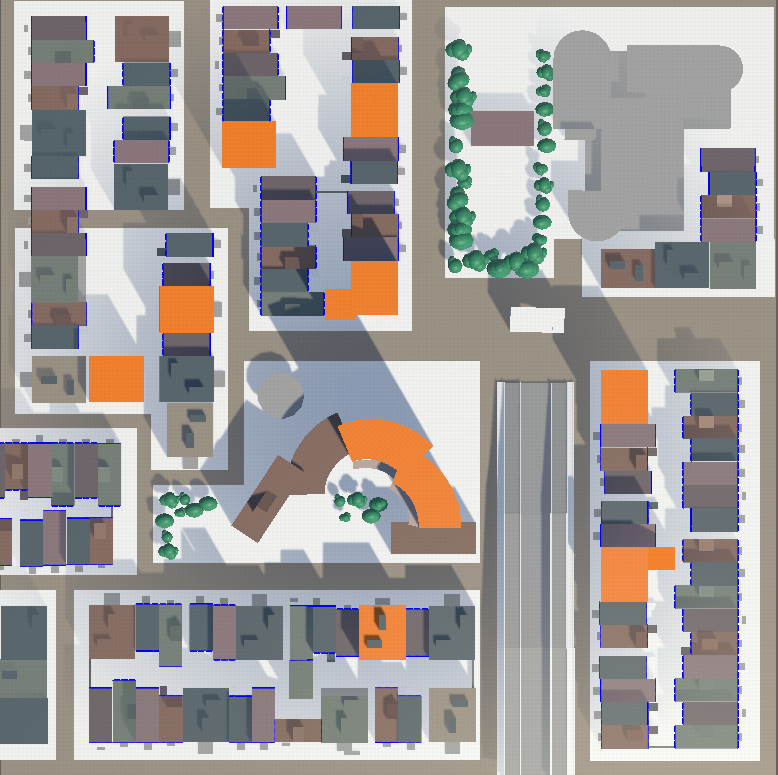
Top view from an early draft. The block layout had to be altered from a traditional New York grid type of layout to a more overlapping type because of restrictions of sight lines
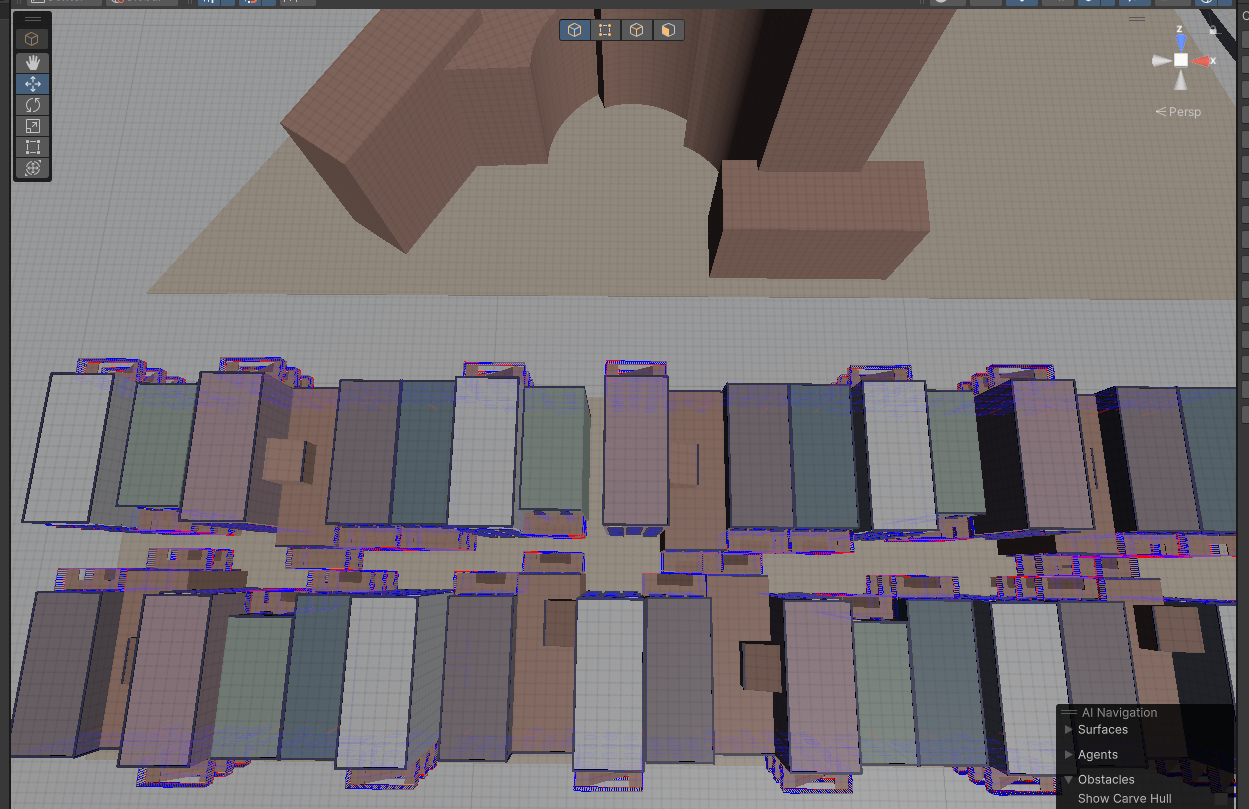
The initial blockout where i experimented with tenement buildings and height diference to create interesting rooftop traversal.
Case 2: Stockgen Lab, Linear Level Design
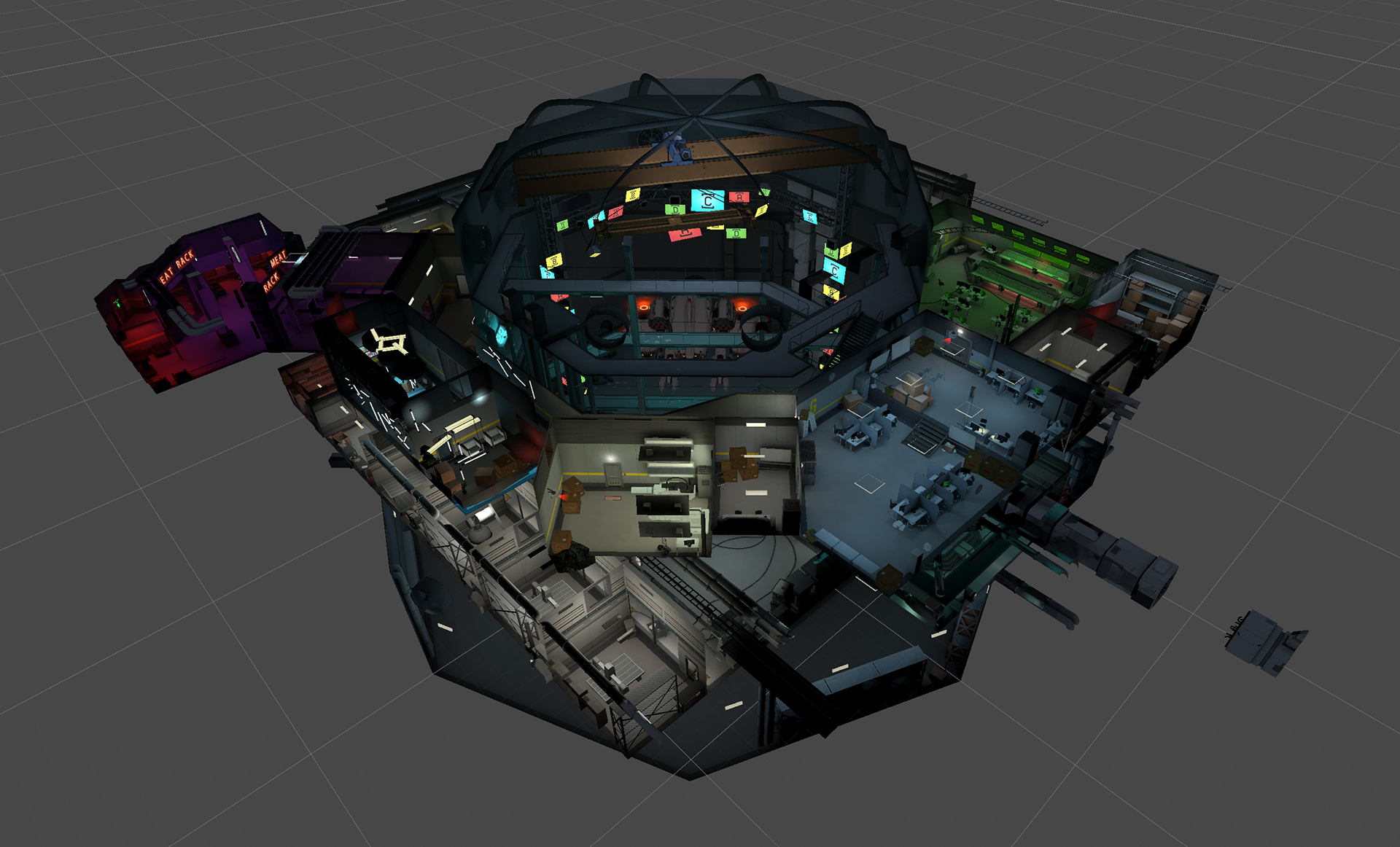
This case focuses on a linear level, Stockgen Lab, set in the later stages of the game. My role was to design a buildup leading into a boss fight against the “Titan Mouser.”
The encounter takes place in a vertical silo space, where players navigate across layered platforms to reach the boss’s weak points. To support this, I proposed an early concept where the level starts at the top and spirals downward around the silo, making it and underground silo. This structure was designed to foreshadow the boss and reinforce a sense of scale and anticipation.
As players progress, windows gradually reveal the interior space and the boss itself, creating a mid-level narrative payoff and enhancing the connection between traversal and storytelling.
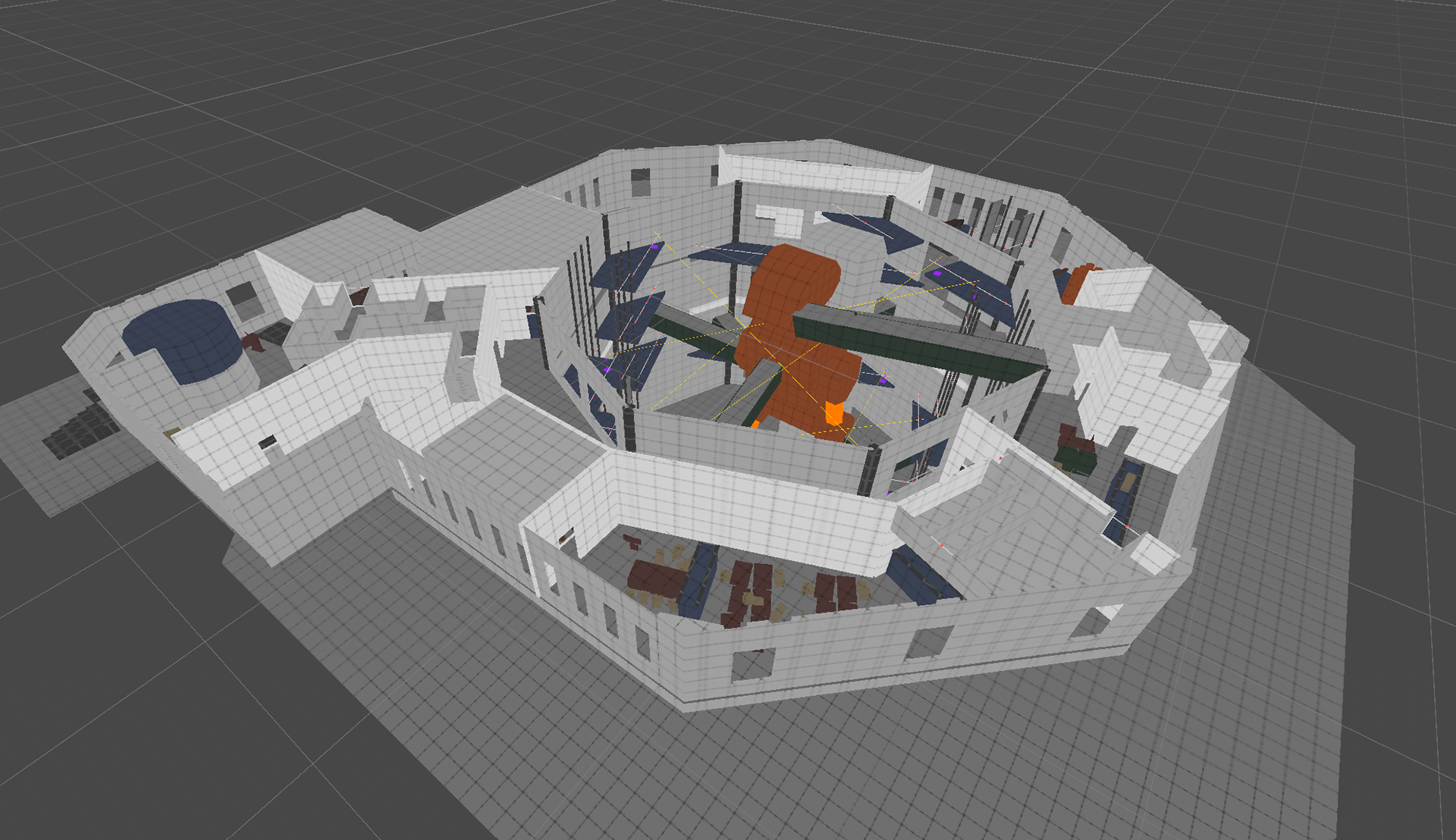
Blockout view of the top level, featuring the central silo with the Titan Mouser highlighted in orange. The level is designed to support both stealth and brawler playstyles, with multiple intersecting paths guiding the player downward.
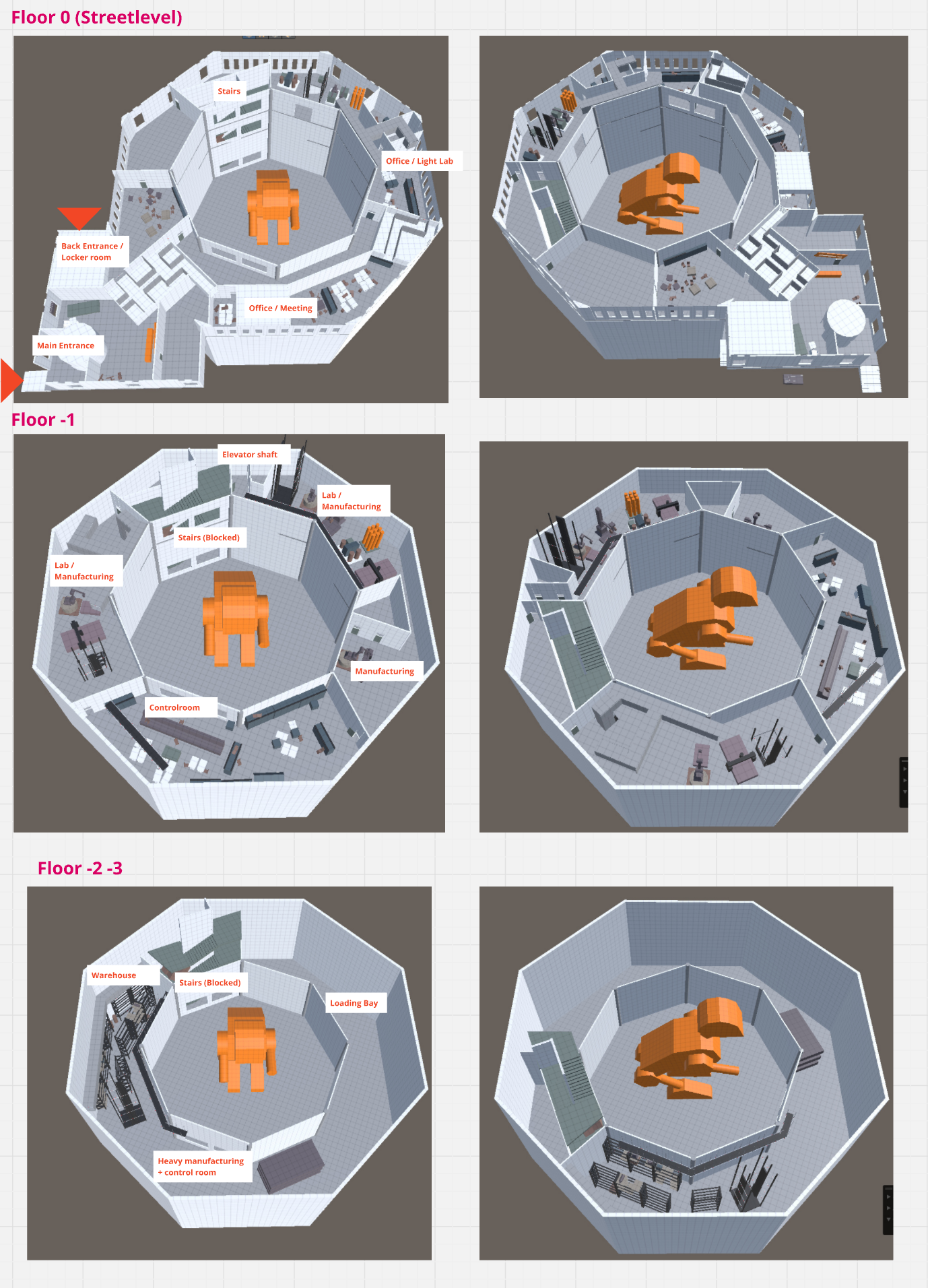
An early blockout exploring traversal paths and environmental themes to create variation between different areas of the level.
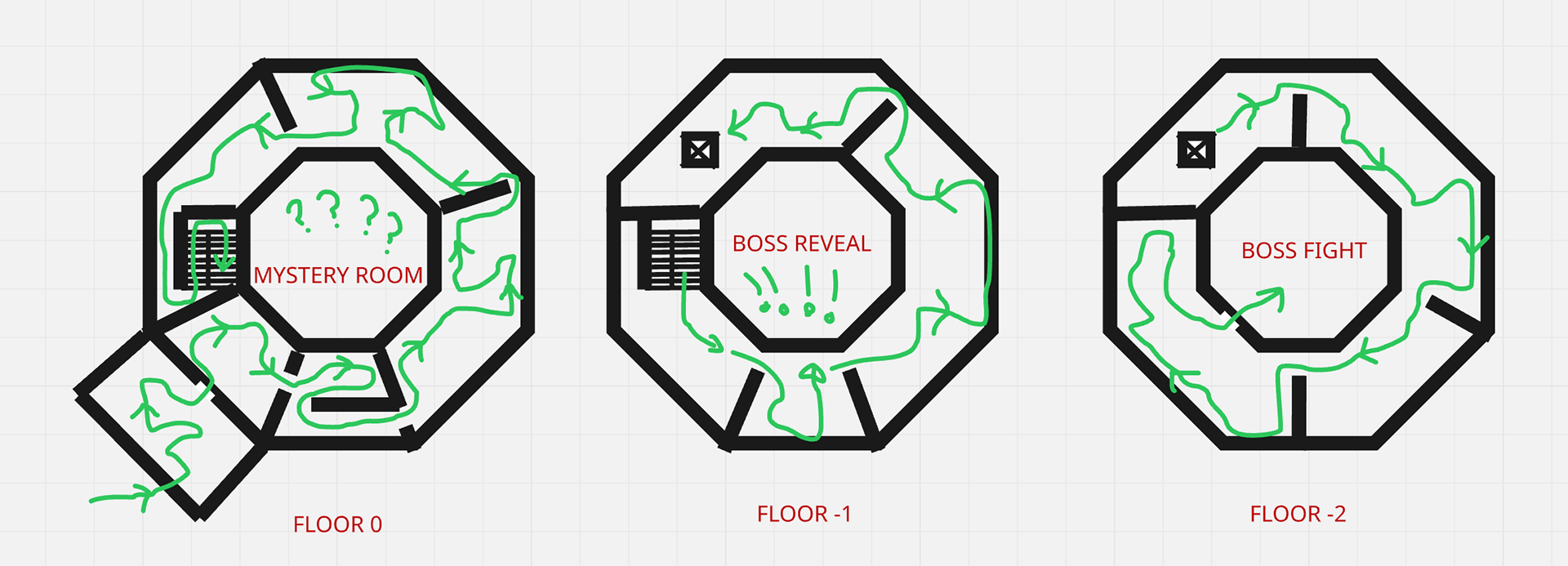
An initial layout over the player progression
Case 3: The Port, Hybrid Level Design
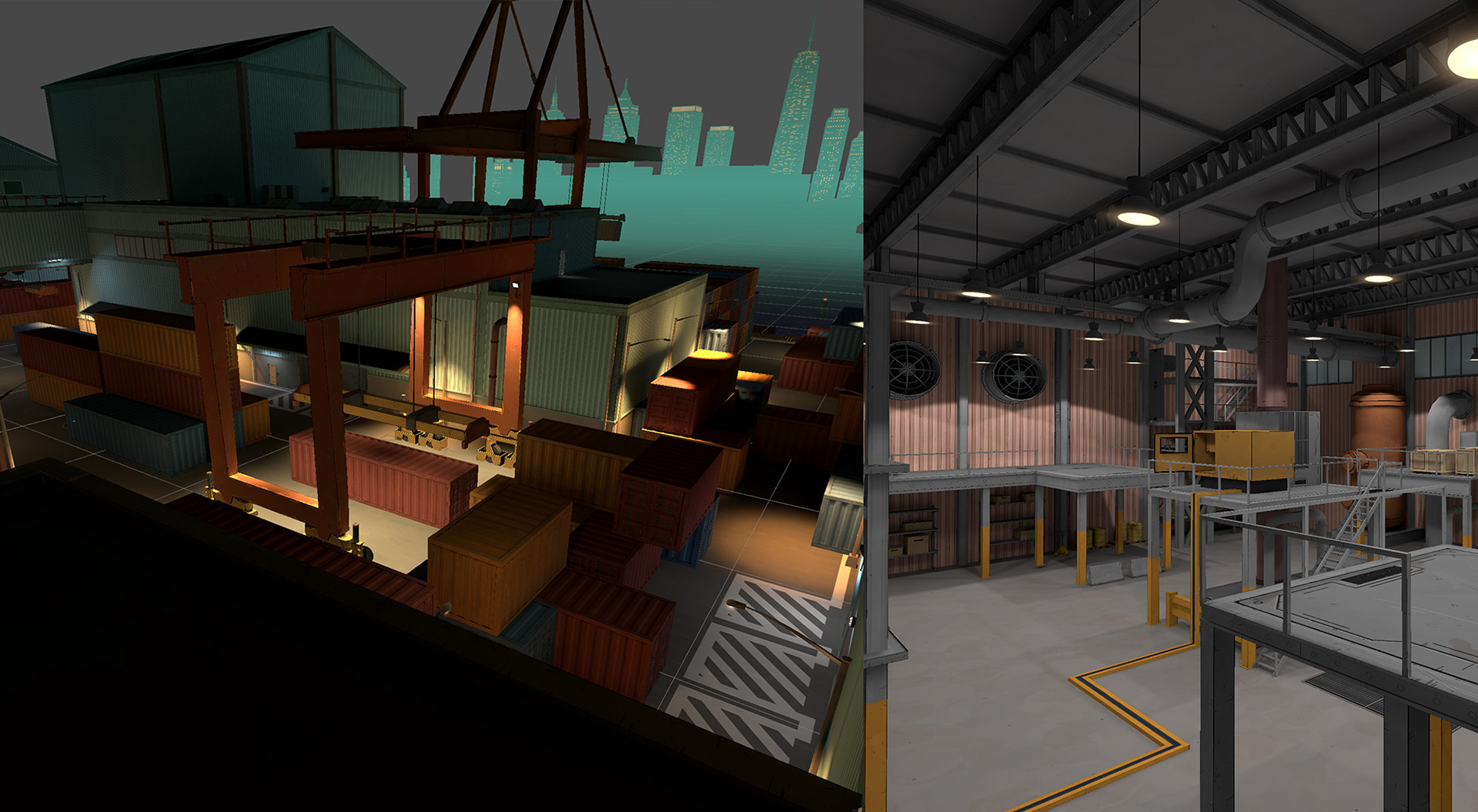
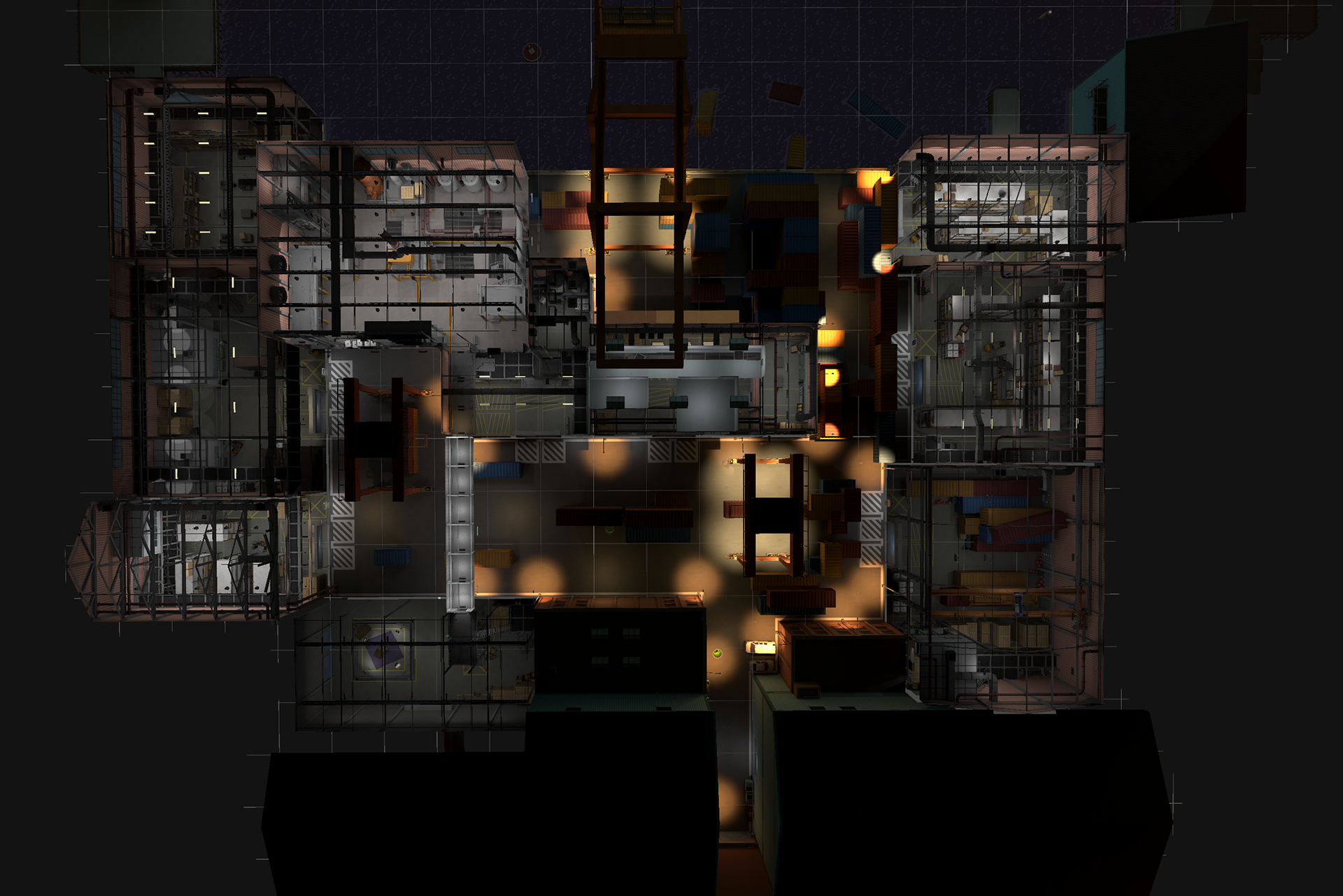
This showcases a hybrid level combining free roam exploration with linear mission progression. The level is structured as an open environment, while the mission logic guides the player through a more directed experience.
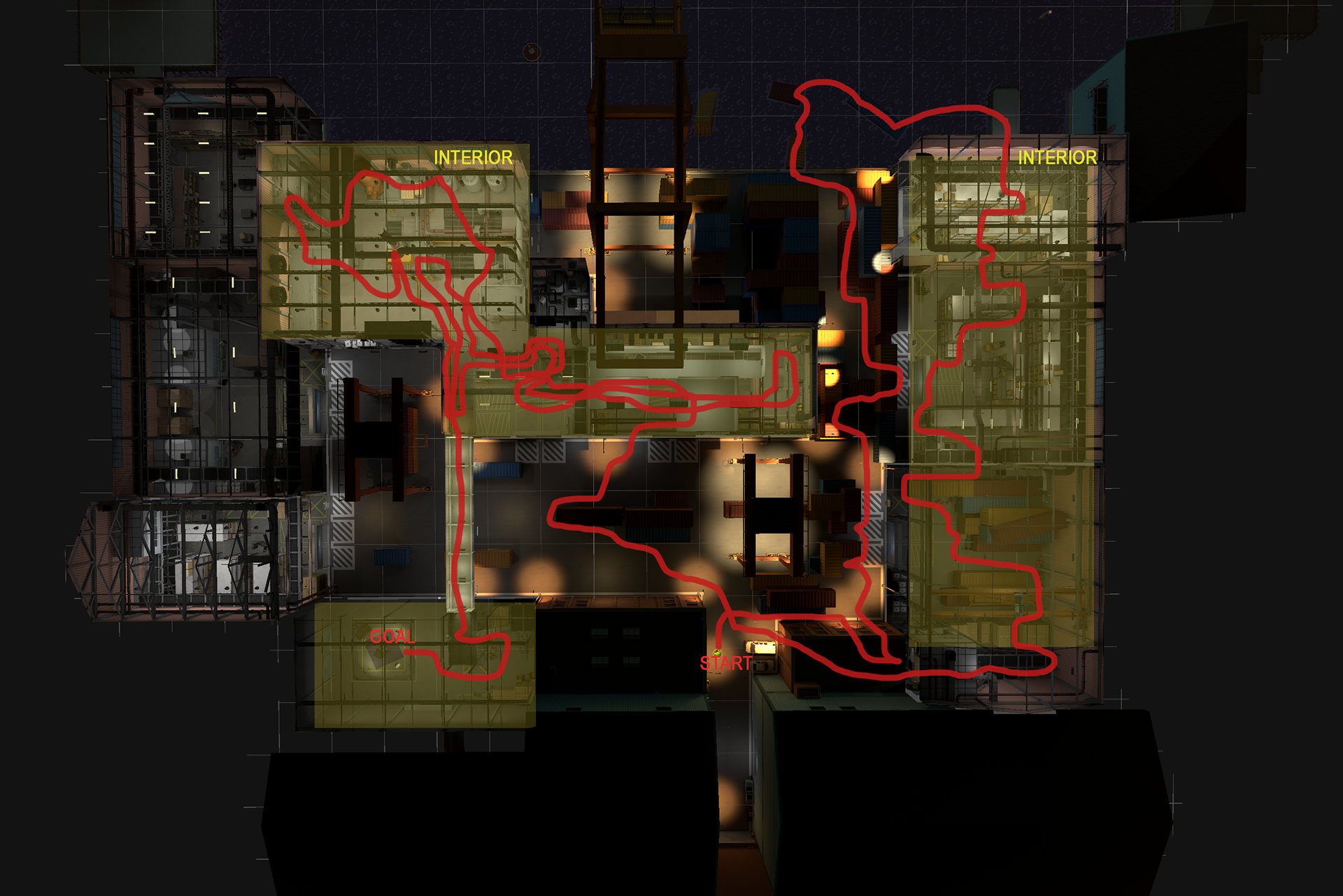
The player’s objective is to locate a specific shipping crate hidden within a sealed-off area. To discover its location, players are first guided to an office to find the shipping manifests. To access the sealed area, players must restore power to a generator by collecting spare parts scattered throughout the warehouse.
Once the player reaches the sealed area and retrieves the lost crate, a boss encounter is triggered.
The level combines interior warehouse and logistics spaces with exterior port environments filled with shipping containers. The exterior areas allow for open traversal and player choice, while the interiors are more controlled and linear, creating a contrast between free exploration and guided gameplay.
This level explored how hybrid level design can support both player freedom and structured mission flow.